
If you’re exploring small living options, you’ve probably come across two popular choices: the space capsule home and the tiny house on wheels (THOW).
At first glance, they seem similar — compact, mobile, and designed for minimalist living.
But once you dig deeper, the differences are significant. And depending on your lifestyle, one may be a much better fit than the other.
In this post, we’ll compare space capsule vs tiny house on wheels across 7 key areas to help you decide.
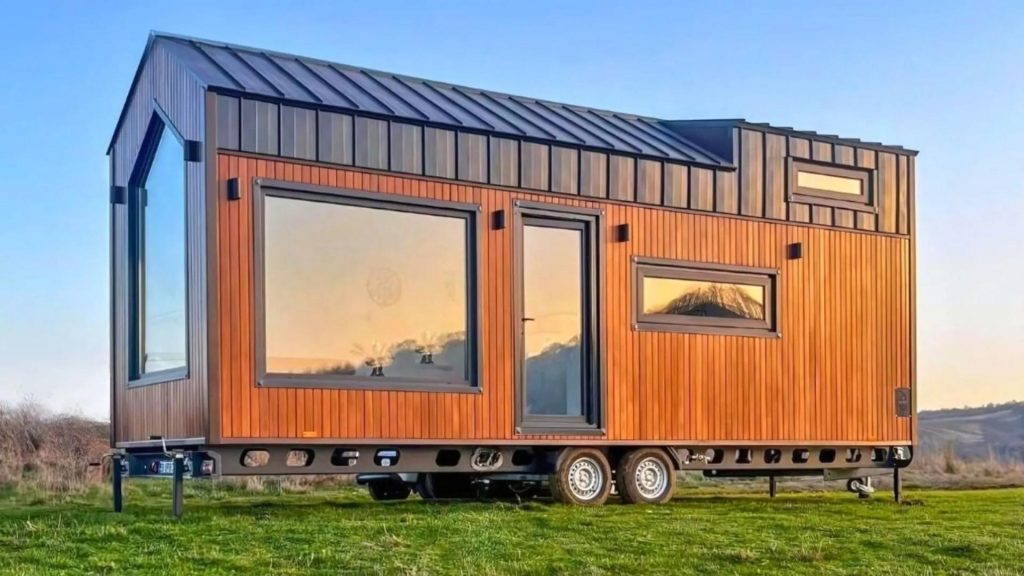
What is a Tiny House on Wheels?
A tiny house on wheels is exactly what it sounds like — a small house (typically 15–35 feet long) built on a trailer chassis, designed to be towed by a vehicle.
Common features:
- Wood or steel frame construction
- Standard RV-style hookups
- Can be moved, but not easily
- Often DIY or custom-built
Pros: Mobile, can be parked on land without a foundation, strong community support
Cons: Poor insulation, towing requires heavy-duty vehicle, ongoing maintenance, depreciates like an RV
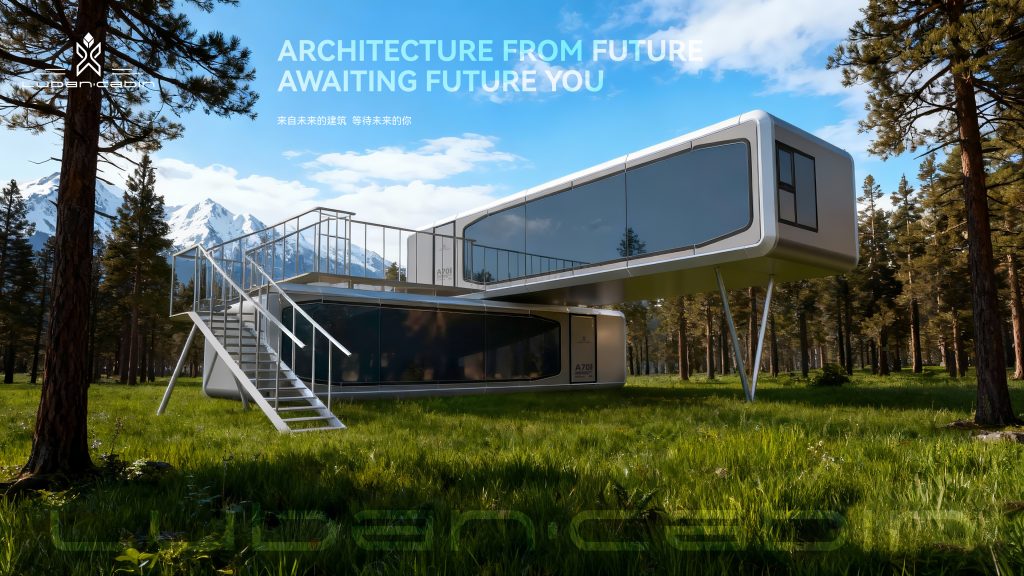
What is a Space Capsule Home?
A space capsule home (like Luban Cabin) is a prefabricated, futuristic-looking micro-home designed for permanent or semi-permanent placement.
Common features:
- Aerospace-grade aluminum shell
- High-density polyurethane insulation
- Curved, aerodynamic design
- Pre-installed electrical and plumbing
Pros: No rust, no termites, excellent insulation, low maintenance, designed for all climates
Cons: Not towable (requires flatbed truck and crane), less mobile than a THOW
Head-to-Head Comparison: Space Capsule vs Tiny House on Wheels
| Feature | Space Capsule | Tiny House on Wheels |
|---|---|---|
| Mobility | Requires truck + crane (1–2 hours to load) | Towable with heavy-duty truck (but not often moved) |
| Insulation | ✅ 100mm polyurethane (-40°C to +55°C) | ❌ Thin fiberglass or foam (RV-grade) |
| Durability | Aluminum shell (no rust, 50+ years) | Wood/steel (rust, rot, termites) |
| Maintenance | Very low (wash exterior once a year) | High (paint, seal, repair, re-caulk) |
| Waterproofing | 6-layer system (no leaks) | Rubber roof + caulking (needs annual re-seal) |
| Windows | Panoramic double/triple glazed | Small RV-style windows |
| Interior finish | Pre-installed, modern | Often DIY or basic |
| Off-grid ready | ✅ Solar-ready, composting toilet ready | ⚠️ Possible but limited roof space for solar |
| Resale value | Holds value (durable materials) | Depreciates (like RV) |
| Price (all-in) | 25,000–25,000–50,000 | 30,000–30,000–80,000+ (custom) |
1. Mobility: Which One is Easier to Move?
Tiny house on wheels: Technically mobile, but most owners move only once or twice a year. Towing requires a ¾-ton or 1-ton truck. Realistically, they’re not “daily drivers.”
Space capsule: Requires a flatbed truck and crane to load. But once placed, it’s more stable and better sealed than a THOW.
Winner: Tiny house on wheels (if you truly need to move often)
2. Insulation & Climate Performance
Tiny house on wheels: Most use standard RV insulation (thin fiberglass or foam). In cold weather, pipes freeze. In hot weather, AC runs constantly.
Space capsule: 100mm high-density polyurethane insulation. Tested from -40°C to +55°C. Works in Norway, Canada, Siberia, or the Sahara.
Winner: Space capsule (by a wide margin)
3. Maintenance & Durability
Tiny house on wheels: Wood rots. Steel rusts. Rubber roofs need replacement every 10–15 years. Caulking needs annual re-seal. Paint fades.
Space capsule: Aluminum doesn’t rust. No wood = no termites. 6-layer waterproofing means no re-caulking. Just wash the exterior once a year.
Winner: Space capsule (dramatically lower maintenance)
4. Interior Space & Livability
Tiny house on wheels: Typically 8.5 ft wide (legal towing width). Narrow and boxy. Loft bedrooms require climbing a ladder.
Space capsule: Curved walls create a more open feel. Panoramic windows bring in natural light. Full-height ceilings throughout.
Winner: Tie (depends on design preference)
5. Cost Comparison
| Cost Item | Space Capsule | Tiny House on Wheels |
|---|---|---|
| Base shell | 15,000–15,000–25,000 | 20,000–20,000–50,000 (DIY) |
| Finished (all-in) | 25,000–25,000–50,000 | 40,000–40,000–80,000+ |
| Annual maintenance | ~$100 | ~500–500–1,000 |
| Resale value | Holds value | Depreciates |
Winner: Space capsule (lower total cost + better value retention)
6. Off-Grid Capability
Tiny house on wheels: Limited roof space for solar. Small holding tanks. Can be off-grid, but requires careful planning.
Space capsule: Large flat roof surface for solar panels. Designed for composting toilets. Rainwater ready. Easier to make fully self-sufficient.
Winner: Space capsule
7. Aesthetics & “Wow Factor”
Tiny house on wheels: Cute, cozy, traditional. Fits the “cottage” aesthetic.
Space capsule: Futuristic, sleek, Instagram-worthy. Looks like something from a sci-fi movie.
Winner: Personal preference — but capsules get more attention
Which One Should You Choose?
| If you want… | Choose… |
|---|---|
| To move your home every few weeks | Tiny house on wheels |
| A weekend getaway you tow seasonally | Tiny house on wheels |
| A permanent or semi-permanent home | Space capsule |
| Extreme climate performance (-40°C) | Space capsule |
| Low maintenance, no repairs | Space capsule |
| Rental / AirBnB property | Space capsule (higher nightly rates) |
| DIY project and customization | Tiny house on wheels |
| Off-grid living | Space capsule |
The Bottom Line
Both space capsules and tiny houses on wheels offer an alternative to traditional housing. But they serve different purposes.
Tiny houses on wheels are for people who want mobility and don’t mind ongoing maintenance. They’re essentially upgraded RVs.
Space capsules are for people who want durability, climate performance, and minimal maintenance. They’re real homes — just smaller and futuristic.
“If you want to move often, get a THOW. If you want a home that lasts decades with almost no upkeep, get a space capsule.”
Real-World Example
A Norwegian client recently chose Luban Cabin over a tiny house on wheels for their remote cabin. Winter temperatures drop to -35°C. They needed insulation that works and zero maintenance.
A THOW would have frozen pipes and required constant sealing. The space capsule just works.
👉 Still deciding between a space capsule and a tiny house on wheels? Contact us for a free consultation. We’ll help you find the right fit for your climate, budget, and lifestyle.