
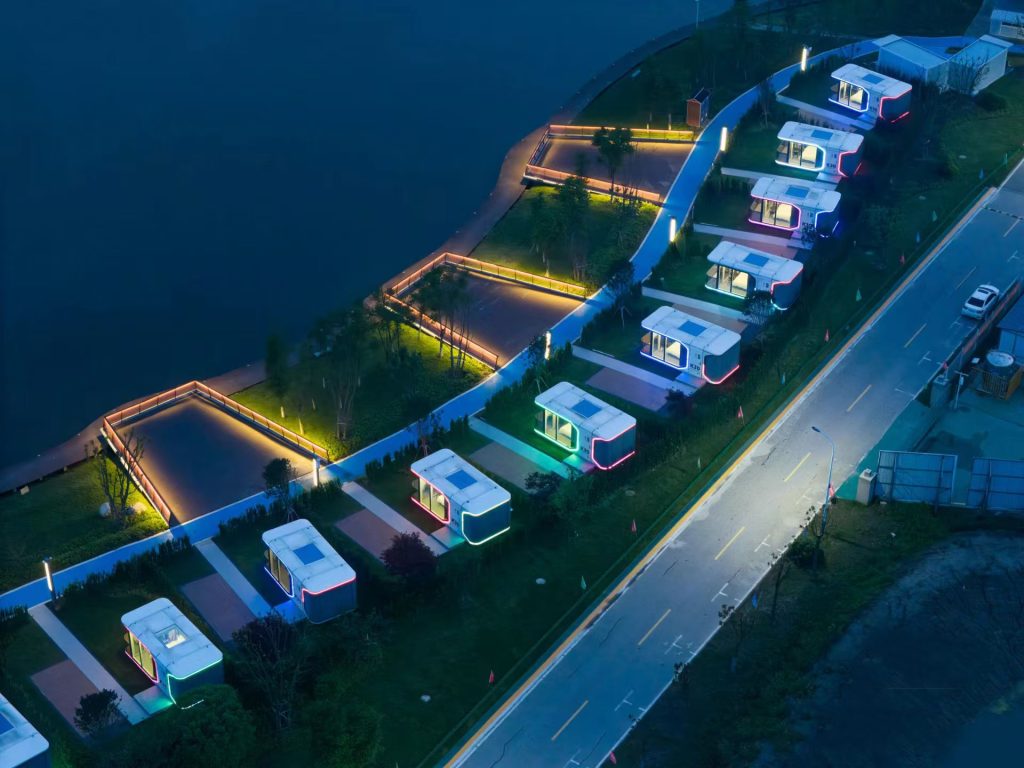
One of the biggest draws of a space capsule home is the freedom to put it anywhere — a forest, a desert, a mountain ridge, or a remote coastline.
But living off the grid isn’t just about placing a beautiful capsule in nature. You need power, water, and waste management.
In this post, we’ll break down exactly how to make your off-grid space capsule fully self-sufficient.
Why Go Off-Grid with a Space Capsule?
Before we dive into the how, let’s talk about the why.
| Reason | Explanation |
|---|---|
| Lower costs | No monthly utility bills |
| Location freedom | Build on land without grid access |
| Sustainability | Reduce your carbon footprint |
| Resilience | No blackouts or service interruptions |
| Simplicity | One system to manage, not three |
A Luban Cabin is designed to be off-grid ready — meaning the structure itself is insulated, sealed, and pre-wired for alternative systems.
1. Power: Solar Is the #1 Choice
The most common and reliable way to power an off-grid space capsule is solar.
What you’ll need:
| Component | Purpose | Estimated Cost |
|---|---|---|
| Solar panels | Capture sunlight | $1,000–$3,000 |
| Charge controller | Regulate battery charging | $200–$600 |
| Battery bank | Store energy for night/cloudy days | $2,000–$6,000 |
| Inverter | Convert DC to AC power | $500–$1,500 |
| Backup generator (optional) | Extended cloudy periods | $500–$2,000 |
Total solar setup: $4,000–$12,000 depending on capacity
How much power do you need?
| Appliance | Wattage | Hours/day | Daily Wh |
|---|---|---|---|
| LED lights (4) | 40W | 5 | 200 |
| Laptop | 50W | 4 | 200 |
| Refrigerator (compact) | 80W | 24 (cycles) | 500 |
| Water pump | 100W | 1 | 100 |
| Phone/device charging | 20W | 4 | 80 |
| Total daily need | ~1,080 Wh |
A 2kWh battery system (2,000 watt-hours) gives you almost 2 days of autonomy. For most capsule dwellers, 3–5kWh is the sweet spot.
Pro tip: Mount solar panels on a small ground frame nearby — not on the capsule roof — so you can park in shade while panels stay in sun.
2. Water: Three Options for Off-Grid Living
Water is the most critical resource. Here are your options:
Option 1: Rainwater Harvesting (Best for most locations)
| Component | Purpose |
|---|---|
| Gutters & downspouts | Collect roof runoff |
| First-flush diverter | Discard initial dirty water |
| Storage tank (500–2,000L) | Hold collected water |
| Sediment filter | Remove debris |
| UV or carbon filter | Make water drinkable |
Cost: $500–$2,000
Best for: Areas with regular rainfall (forests, mountains, coasts)
Option 2: Delivered Water (Simple but ongoing cost)
Have water delivered by truck and stored in a tank.
Cost: $50–$200 per delivery (varies by location)
Best for: Dry areas (deserts) or temporary setups
Option 3: Well or Spring (Most expensive upfront)
Drill a well or tap into an existing spring.
Cost: $3,000–$15,000+
Best for: Permanent, long-term installations
3. Waste Management: Composting Toilets Are the Answer
Traditional flush toilets require sewer or septic — which isn’t always possible off-grid.
The solution: Composting toilet
| Feature | Benefit |
|---|---|
| No water needed | Saves precious water |
| No sewer/septic | Works anywhere |
| Low maintenance | Empty every 2–4 weeks |
| Eco-friendly | Produces compost |
Popular brands: Nature’s Head, Separett, OGO
Cost: $800–$1,500
For greywater (sinks, shower): Use a simple drainage field or greywater planter box — no septic tank required.
4. Heating & Cooling: Passive Design + Backup
Luban Cabins come with high-quality insulation (50mm+ polyurethane/rockwool), which helps maintain temperature year-round.
For heating:
| Option | Cost | Best for |
|---|---|---|
| Diesel heater | $150–$400 | Cold climates, efficient |
| Propane heater (vented) | $200–$500 | Moderate cold |
| Wood stove | $500–$1,500 | Very cold, unlimited fuel |
| Electric heater | $50–$200 | Only if you have excess solar |
For cooling:
| Option | Cost | Best for |
|---|---|---|
| 12V DC fan | $50–$150 | Mild heat |
| Portable AC (low BTU) | $300–$600 | Hot climates (needs solar or generator) |
| Mini-split AC (efficient) | $800–$1,500 | Best performance, higher upfront |
Passive tips: Park in shade, use reflective window film, open windows at night for cross-breeze.
Complete Off-Grid Budget for a Space Capsule
| System | Low-End | High-End |
|---|---|---|
| Solar power (3–5kWh) | $4,000 | $8,000 |
| Rainwater harvesting | $500 | $2,000 |
| Composting toilet | $800 | $1,500 |
| Heating (diesel/propane) | $150 | $500 |
| Cooling (fan/AC) | $50 | $600 |
| Total off-grid setup | $5,500 | $12,600 |
Add the capsule itself ($20,000–$40,000) and you have a complete off-grid home for $25,000–$52,000 — often less than a traditional house down payment.
Real-Life Off-Grid Space Capsule Example
*”I placed my Luban Cabin on 5 acres in the Arizona desert. With 4kWh of solar, a 1,000L rainwater tank, and a composting toilet, I’ve been living completely off-grid for 8 months. No utility bills. No neighbors. Just freedom.”*
— Luban Cabin owner, USA
The Bottom Line
An off-grid space capsule isn’t just possible — it’s practical. With solar power, rainwater harvesting, and a composting toilet, you can live comfortably anywhere.
Luban Cabins are designed with off-grid living in mind. The insulation is already there. The wiring is pre-run. All you add is the systems.
👉 Ready to take your space capsule off-grid? Luban Cabin’s design makes it easy. Start planning your self-sufficient lifestyle today.