
When people think about tiny living, they usually focus on lifestyle, simplicity, and downsizing.
But for investors, resort owners, and Airbnb hosts, the question is different:
Which option creates a better business opportunity?
Today, both tiny houses and space capsule houses are being used as profitable accommodation solutions for:
- Airbnb rentals
- Glamping resorts
- Boutique hotels
- Eco-tourism projects
- Private vacation properties
However, when viewed as a business investment, the differences become clear.
Let’s compare them based on the factors that matter most for profitability.
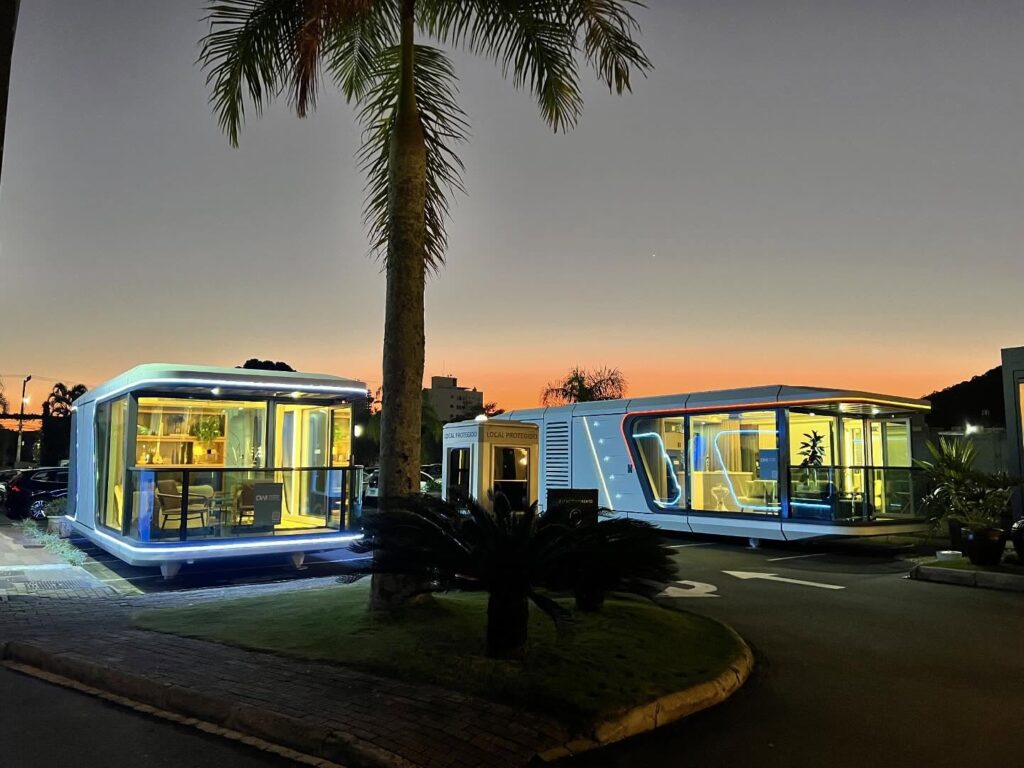
The Business Case for Small-Scale Accommodation
A successful accommodation business depends on more than just the building itself.
Investors need to consider:
| Factor | Why It Matters |
|---|---|
| Nightly rental price | Determines revenue potential |
| Occupancy rate | Creates stable cash flow |
| Maintenance cost | Directly affects profit margins |
| Guest experience | Drives reviews and repeat bookings |
| Installation speed | Determines how quickly revenue starts |
| Long-term value | Protects your investment |
Now let’s see how space capsule houses and tiny houses compare.
1. Nightly Revenue Potential
For hospitality businesses, unique design creates value.
A traditional tiny house can provide a comfortable and attractive stay, but the market has become increasingly competitive. Many guests see tiny houses as similar to cabins, cottages, or RV-style accommodation.
Space capsule houses offer something different.
With their futuristic architecture, panoramic windows, and modern interiors, capsule houses create a memorable guest experience. This uniqueness helps properties stand out on platforms like Airbnb and booking websites.
A unique accommodation often allows owners to:
- Charge premium nightly rates
- Attract more attention online
- Differentiate from nearby competitors
For investors, the goal is not simply to provide a room — it is to create an experience guests are willing to pay more for.
2. Occupancy Rate and Market Attraction
Occupancy is one of the most important factors in any accommodation business.
A beautiful property that sits empty cannot generate returns.
Space capsule houses have a strong advantage because they naturally create curiosity. Many travelers are attracted by experiences they cannot find everywhere else.
Guests are more likely to search for:
- “unique stays”
- “futuristic hotels”
- “glass cabin experiences”
- “Instagram-worthy accommodations”
This gives capsule house projects a stronger marketing advantage compared with traditional accommodation options.
Tiny houses can still perform well, especially in established vacation areas, but they often compete in a more crowded market.
3. Maintenance Cost and Long-Term Profit
Maintenance directly impacts your investment return.
Traditional tiny houses often use wood-based structures, which may require:
- Exterior painting
- Waterproof treatment
- Roof maintenance
- Pest prevention
- Regular repairs
Over time, these costs can reduce profit margins.
Space capsule houses are designed with durable materials such as aerospace-grade aluminum structures and weather-resistant exterior coatings.
Advantages include:
- Strong corrosion resistance
- Better protection against rain and humidity
- Reduced exterior maintenance
- Longer service life
For hospitality operators managing multiple units, lower maintenance means more predictable operating costs.
4. Faster Installation, Faster Revenue
In business, speed matters.
The longer your project takes to open, the longer you wait for returns.
Traditional tiny houses often involve:
- On-site construction
- Multiple contractors
- Weather delays
- Longer preparation periods
Space capsule houses are manufactured in a factory environment and delivered as completed units.
Typical process:
| Stage | Tiny House | Space Capsule House |
|---|---|---|
| Production | Several months | Around 8-12 weeks |
| Installation | Weeks or longer | Usually 1-2 days |
| Business launch | Longer preparation | Faster operation |
For investors, faster deployment means earlier revenue generation.
5. Long-Term Asset Value
A good investment should maintain value over time.
Tiny houses may experience depreciation due to:
- Aging materials
- Structural wear
- Renovation requirements
- Changing design trends
Space capsule houses are built with modern industrial materials and a design style that remains distinctive.
Their advantages include:
- Durable aluminum exterior
- Modern architectural appeal
- Lower renovation requirements
- Strong visual attraction for future buyers
A unique accommodation unit can remain competitive in the market for many years.
6. Guest Experience and Marketing Advantage
Modern travelers are not only looking for a place to sleep.
They want memorable experiences.
A space capsule house naturally creates:
- Photo opportunities
- Social media sharing
- Word-of-mouth marketing
- Stronger brand identity
Guests may share their stay online, helping businesses gain organic exposure.
In today’s hospitality market, a property that markets itself has a major advantage.
Space Capsule House vs Tiny House: Business Investment Comparison
| Business Factor | Tiny House | Space Capsule House |
|---|---|---|
| Design uniqueness | Medium | High |
| Rental positioning | Standard accommodation | Premium experience |
| Maintenance needs | Higher | Lower |
| Installation speed | Slower | Faster |
| Marketing potential | Moderate | Strong |
| Scalability for resorts | Good | Excellent |
| ROI potential | Good | Higher potential |
The Bottom Line: Which Is Better for Business?
If you are choosing a home for personal living, a tiny house can be a great solution.
But if your goal is to build a profitable accommodation business, a space capsule house business investment offers several advantages:
✅ Higher guest attraction
✅ Faster project deployment
✅ Lower maintenance requirements
✅ Stronger marketing potential
✅ Better scalability for hospitality projects
A tiny house provides a place to stay.
A space capsule house creates an experience — and experiences are what modern travelers are willing to pay for.
Ready to Explore Your Project?
Whether you are planning an Airbnb property, glamping resort, or boutique hotel, we can help you evaluate:
- Recommended number of units
- Estimated investment
- Layout planning
- Revenue potential
Contact us with your location and project details, and we’ll help you analyze the best solution for your business.