
When people look for affordable, flexible housing solutions, two options often come up: the traditional tiny house and the modern space capsule house.
At first glance, a tiny house seems like the obvious winner. The initial purchase price is usually lower, and many people are attracted by the idea of building a small home on a budget.
But the real question is:
Which option costs less over 10, 20, or even 30 years?
The answer depends on more than just the purchase price.
Maintenance, energy efficiency, durability, and replacement costs all play an important role.
Let’s compare the real long-term cost of a space capsule house vs tiny house.
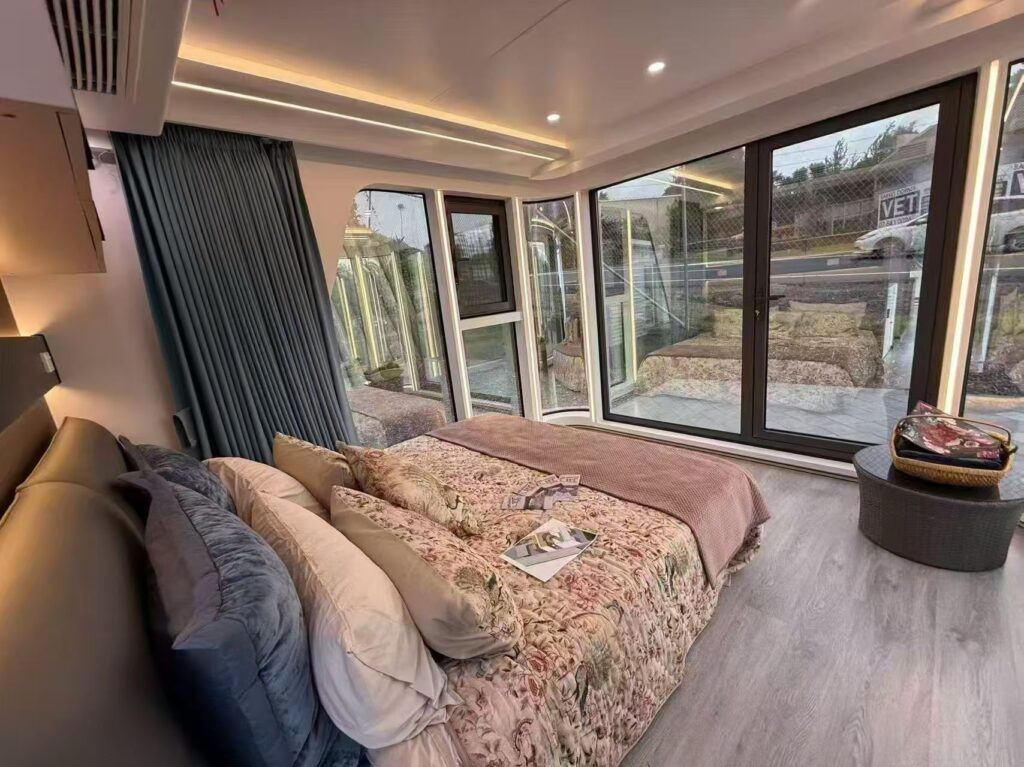
1. Upfront Cost: Tiny House Has the Advantage
| Housing Type | Typical Price Range | Approximate Cost Per Sq Ft |
|---|---|---|
| Tiny House | $30,000 – $75,000 | ~$300+ |
| Space Capsule House | $70,000 – $100,000 | ~$350-$500 |
A tiny house usually has a lower starting price.
DIY tiny houses can sometimes be built for around $30,000, while professionally manufactured models commonly range from $45,000 to $75,000 depending on materials, size, and customization.
A fully equipped space capsule house generally requires a higher initial investment because it includes factory manufacturing, premium materials, integrated systems, insulation, windows, and interior finishing.
Winner for initial cost: Tiny House
However, the purchase price is only one part of the total investment.
2. Maintenance Costs: Space Capsule House Has the Advantage
This is where the difference becomes more noticeable.
| Housing Type | Estimated Annual Maintenance | Common Maintenance Issues |
|---|---|---|
| Tiny House | $1,500 – $3,000 | Painting, sealing, roofing, trailer maintenance |
| Space Capsule House | $500 – $1,200 | Mainly system checks and basic upkeep |
Many tiny houses use traditional building materials such as wood siding, which may require regular maintenance due to moisture, weather exposure, and aging.
For tiny houses on wheels, owners also need to consider:
- Trailer inspections
- Tire replacement
- Axle and suspension maintenance
- Exterior repairs
Space capsule houses are manufactured with durable materials such as aluminum alloy structures and weather-resistant exterior panels.
Benefits include:
- No regular painting
- Better corrosion resistance
- Reduced risk of moisture damage
- Lower exterior maintenance requirements
Over 10 years, the maintenance difference can become significant.
Winner for maintenance: Space Capsule House
3. Energy Efficiency: Space Capsule House Provides Better Performance
Energy costs continue every year, making insulation an important factor.
| Housing Type | Typical Monthly Energy Cost | Insulation Performance |
|---|---|---|
| Tiny House | $50 – $100 | Depends on construction |
| Space Capsule House | $45 – $75 | High-performance insulation systems |
Space capsule houses are designed as complete factory-built units. Their compact structure allows manufacturers to optimize:
- Thermal insulation
- Air tightness
- Heating and cooling efficiency
- Interior climate control
Many models use advanced insulation materials such as polyurethane foam, double or triple-glazed windows, and integrated HVAC systems.
Because of their efficient design, space capsule houses can reduce energy consumption while maintaining comfortable indoor temperatures.
Winner for energy efficiency: Space Capsule House
4. Lifespan: The Hidden Factor Most Buyers Ignore
The cheapest option today may not always be the cheapest option decades later.
| Housing Type | Expected Lifespan |
|---|---|
| Tiny House | Around 15-25 years depending on materials and maintenance |
| Space Capsule House | 25-30+ years with proper maintenance |
Tiny houses can provide excellent value when properly built and maintained. However, lightweight construction materials may require more repairs over time.
Space capsule houses are designed for long-term outdoor use, with:
- Strong structural materials
- Weather-resistant exterior design
- Factory-controlled production quality
A longer lifespan means the initial investment is spread over more years of use.
Winner for durability: Space Capsule House
5. 10-Year Cost Comparison
Let’s look at a simplified example:
| Cost Factor | Tiny House | Space Capsule House |
|---|---|---|
| Purchase Price | $45,000 – $75,000 | $70,000 – $100,000 |
| Maintenance (10 years) | $15,000 – $30,000 | $5,000 – $12,000 |
| Energy Costs (10 years) | $6,000 – $12,000 | $5,400 – $9,000 |
| Estimated Total | $66,000 – $117,000 | $80,400 – $121,000 |
In the first 10 years, a tiny house may still have a lower total cost because of its lower purchase price.
But the gap is much smaller than many buyers expect.
6. 30-Year Cost: The Long-Term Difference Becomes Clearer
Over several decades, replacement and major renovation costs become important.
| Cost Factor | Tiny House (30 Years) | Space Capsule House (30 Years) |
|---|---|---|
| Purchase / Replacement | Higher due to possible replacement | Lower due to longer lifespan |
| Maintenance | Higher | Lower |
| Energy Costs | Higher | Lower |
| Long-Term Value | Depends on condition | More stable |
When considering the full lifecycle cost, a durable space capsule house can become a more economical choice for buyers who plan to use it long term.
7. Other Factors Beyond Cost
Better Space Utilization
Space capsule houses are designed with modern layouts that maximize usable space.
Compared with traditional tiny houses, they often provide:
- More comfortable living areas
- Better interior organization
- Integrated furniture solutions
- Larger panoramic windows
Move-In Ready Solution
One major advantage of a space capsule house is convenience.
A factory-built capsule house can arrive:
✔ Fully finished
✔ Furnished
✔ Equipped with electrical systems
✔ Ready for installation
A tiny house may require additional construction work, customization, or finishing after purchase.
Easier Transportation and Installation
Tiny houses are often built on trailers, which can create limitations:
- Road width restrictions
- Transportation permits
- Towing requirements
Space capsule houses are designed for efficient transportation and can be shipped internationally using standard logistics methods.
This makes them attractive for:
- Resorts
- Glamping projects
- Airbnb businesses
- Remote tourism locations
Final Verdict: Which One Should You Choose?
| Your Priority | Better Choice |
|---|---|
| Lowest upfront price | Tiny House |
| Long-term investment | Space Capsule House |
| Lower maintenance | Space Capsule House |
| Energy efficiency | Space Capsule House |
| Unique modern design | Space Capsule House |
| DIY building experience | Tiny House |
The Bottom Line
A tiny house may save you money at the beginning.
But a space capsule house is designed to save you money through:
- Lower maintenance
- Better energy efficiency
- Longer service life
- Factory-controlled quality
For buyers looking for a modern, durable, and low-maintenance living solution, a space capsule house can be a smarter long-term investment.
It is not simply a smaller house.
It is a new approach to flexible living — combining technology, comfort, and modern design in one compact space.
Ready to compare a Luban space capsule house with a tiny house for your project? Contact us and we can provide a customized cost comparison based on your location and requirements.